New NEW NEW NEW NEW NEW NEW NEW
IRS SiC Roadrunner – High Power. Compact Design.
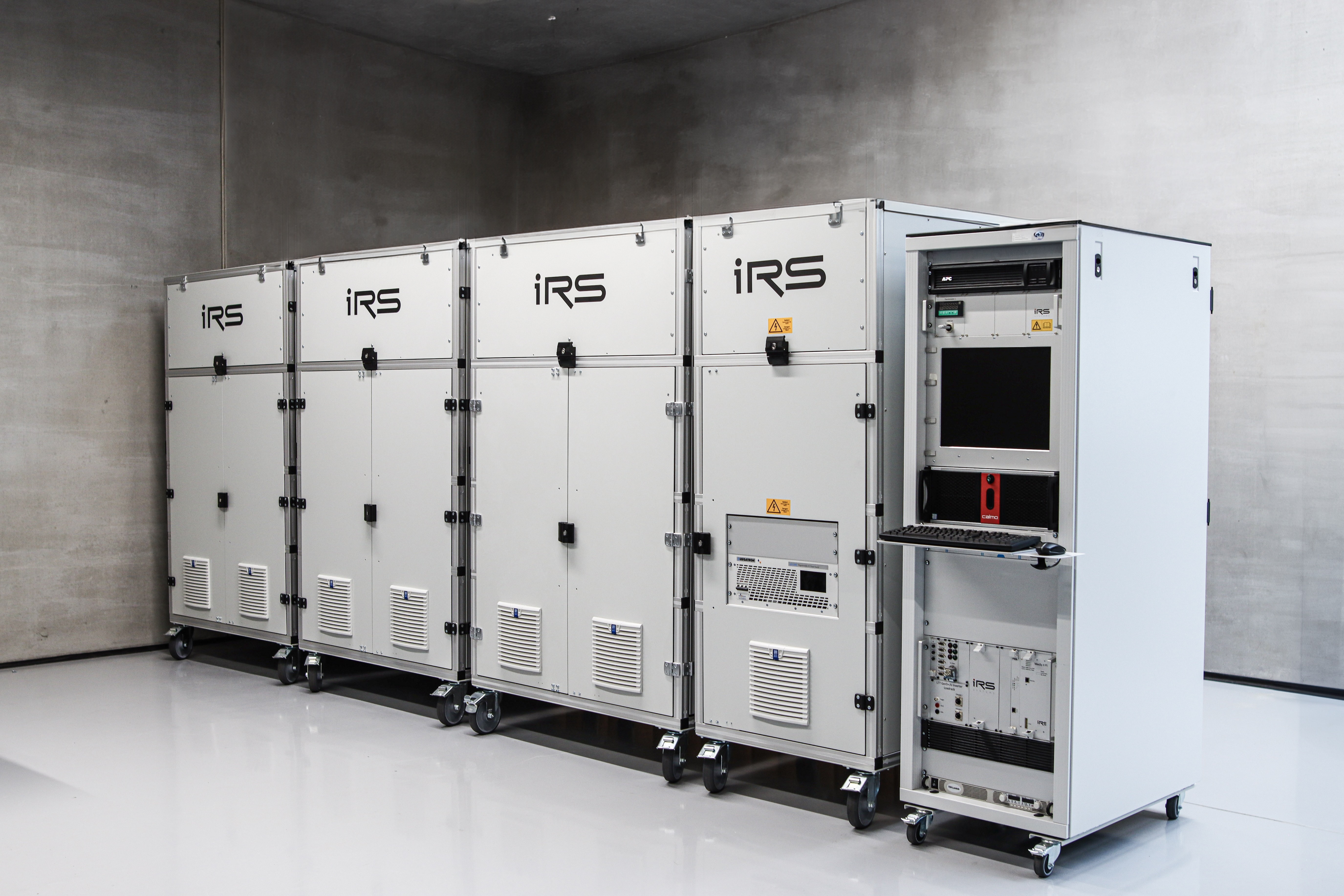
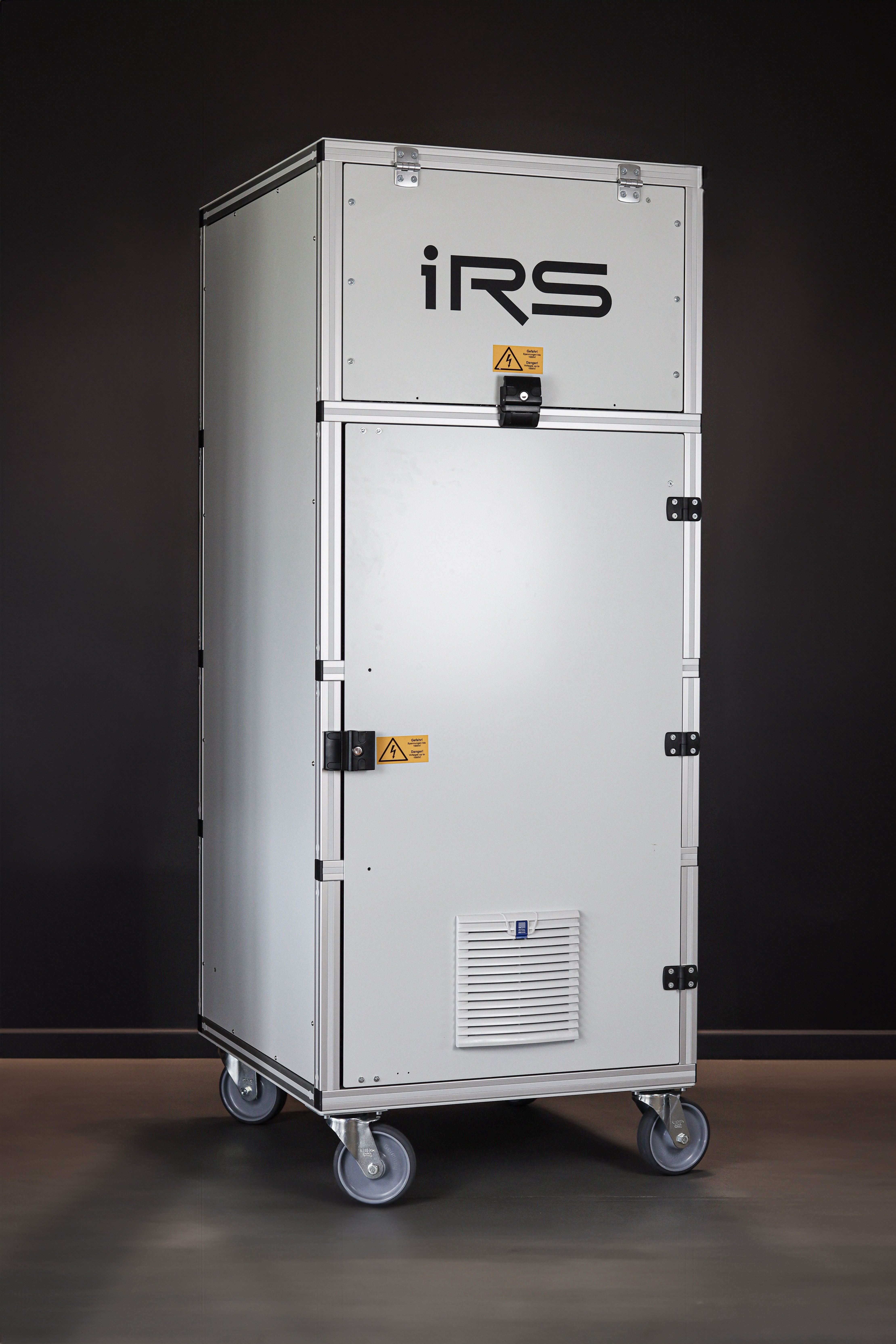
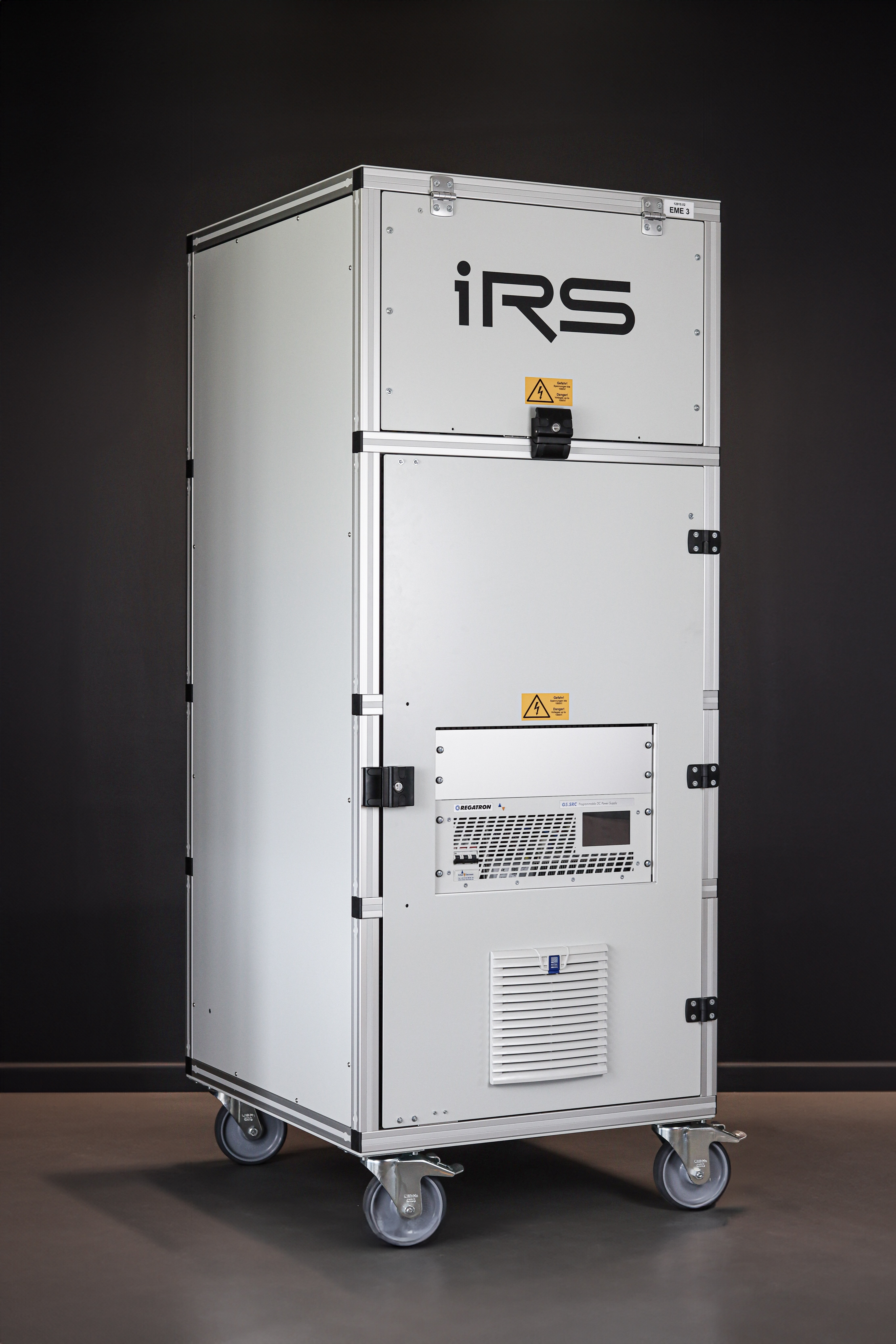
For applications with the highest performance requirements, we offer the IRS SiC Roadrunner as a compact solution for SiC inverter testing.
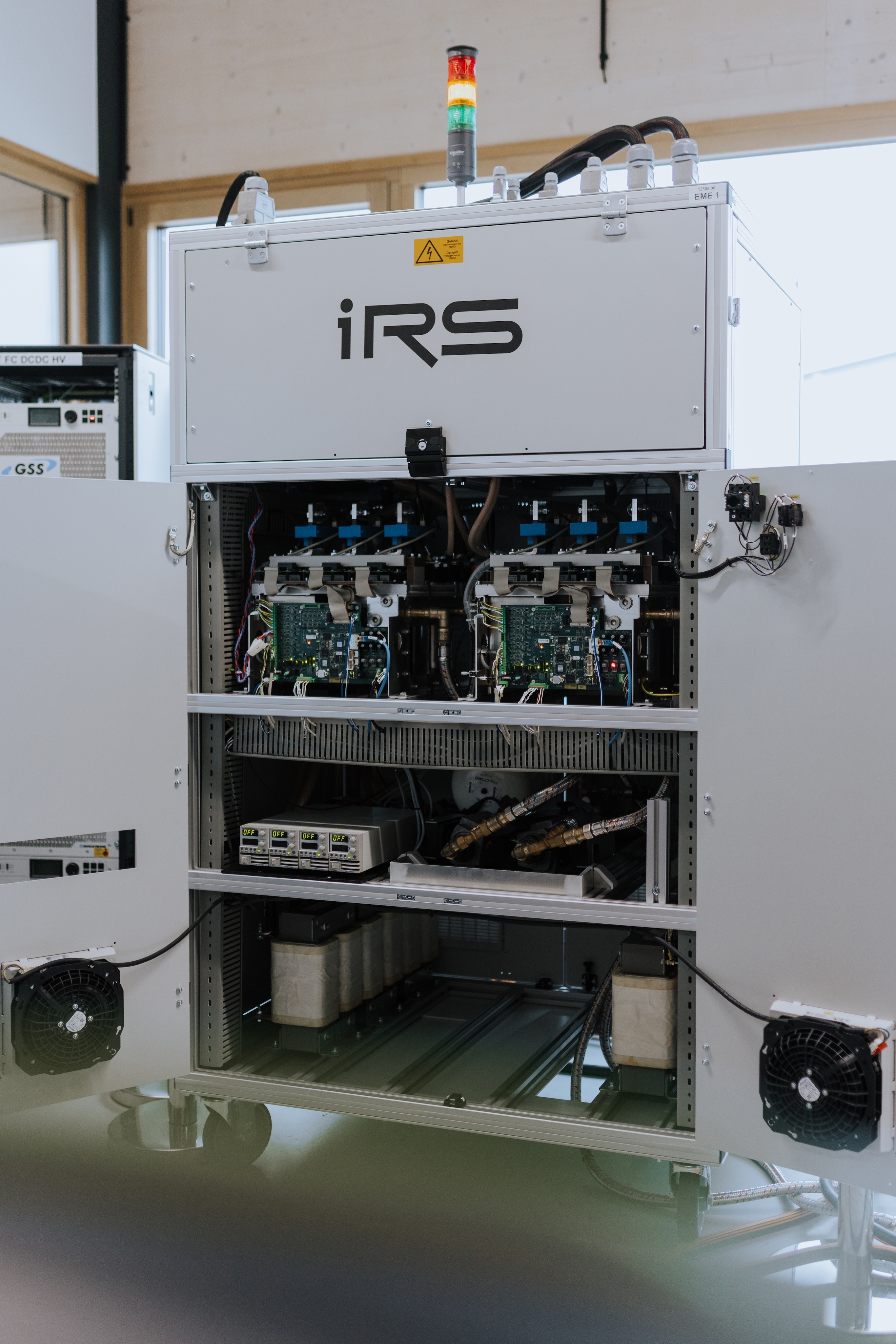
It combines the advantages of Active Motor Load Emulators with an extremely high power density in a mobile 19" rack.
Highlights:
Efficiency up to 99%
Frequency range up to 4 kHz (sine) and 50 kHz (switching frequency)
Simulated active power up to 558 kW per module
Integrated cooling and easy integration
New NEW NEW NEW NEW NEW
IRS SiC Roadrunner – High Power. Compact Design.
For applications with the highest power requirements, we offer the IRS SiC Roadrunner as a compact solution for SiC inverter testing.
It combines the advantages of the Active Motor Load Emulators with an extremely high power density in a mobile 19" rack.
Highlights:
Efficiency up to 99%
Frequency range up to 4 kHz (sine) and 50 kHz (switching frequency)
Simulated active power up to 558 kW per module
Integrated cooling and easy integration
One of the central components of electric or hybrid vehicles is the inverter – a power electronics device that converts the direct current from the battery into alternating current for the electric motor. Therefore, testing inverters requires a battery– and motor simulation.
Battery simulations are available on the market. Depending on the parameters, either standard power supplies with or without grid feedback or complex high-power battery simulators can be used.
To simulate the motor, there are typically two options: a simple passive load with inductors or a costly high-performance electronic motor simulator.
The solution with passive load is very common in all test areas including production, validation, and laboratories. It is cost-effective, simple, but comes with drawbacks, as listed in the table below. The low direct current resulting from the passive load has the advantage that relatively small power supplies can be used, but conversely the DC path of the inverter is not loaded under real conditions.
In electronic motor simulations, the selection is much more limited. For high-performance inverters with more than 100kW, highly developed motor simulators are available from only a few companies at prices well above €500,000. For many applications, the functionality of these simulators is oversized, e.g., in production lines or durability tests. In the latter case, multiple inverters must be tested in parallel, which requires multiple motor simulations. Therefore, in durability tests, the simple passive coil solution is typically applied.
One of the central components of electric or hybrid vehicles is the inverter – a power electronics device that converts the direct current from the battery into alternating current for the electric motor. Therefore, testing inverters requires a battery– and motor simulation.
Battery simulations are available on the market. Depending on the parameters, either standard power supplies with or without grid feedback or complex high-power battery simulators can be used.
To simulate the motor, there are typically two options: a simple passive load with inductors or a costly high-performance electronic motor simulator.
The solution with passive load is very common in all test areas including production, validation, and laboratories. It is cost-effective, simple, but comes with drawbacks, as listed in the table below. The low direct current resulting from the passive load has the advantage that relatively small power supplies can be used, but conversely the DC path of the inverter is not loaded under real conditions.
In electronic motor simulations, the selection is much more limited. For high-performance inverters with more than 100kW, highly developed motor simulators are available from only a few companies at prices well above €500,000. For many applications, the functionality of these simulators is oversized, e.g., in production lines or durability tests. In the latter case, multiple inverters must be tested in parallel, which requires multiple motor simulations. Therefore, in durability tests, the simple passive coil solution is typically applied.
Properties
The concept is based on the idea of operating two inverters directly against each other – both the three motor phases are directly coupled, as is the DC link. A standard power supply can be used as a battery simulator. With appropriate control of the motor simulator, the phase current flows from DUT to simulator through the phase coils and back to the DUT via the DC link and vice versa. This way, the DC link is loaded with a realistic current, but the energy is only exchanged between the two inverters. Therefore, the battery simulation only needs to provide the energy for the losses of the entire system. This is one of the most important advantages: A relatively small power supply without energy feedback into the grid can be used. With a power supply of only 20kW, motors of about 250kW can be simulated. In most applications, the simulator generates the induced voltage of the motor, and the DUT is in current control mode and defines the torque applied to the motor. Since the setup is symmetrical, either the DUT operates as a generator and the simulator as a motor load, or vice versa. Both standard motor operation and recuperation can be simulated. The motor simulator is used in several lifetime simulation systems, EOL testers, and LV124 validation systems.
Application Areas
Cost-effective motor simulator for motors in the range of 10kW to 600kW
Wide voltage range 30V to 1000V DC for BEV, PHEV, or MHEV inverters
Real currents at both the motor phases and the battery connection of the inverter
Motor and recuperation operation
Low power consumption from the battery simulator
6-phase motor simulation available
Properties
The concept is based on the idea of operating two inverters directly against each other – both the three motor phases are directly coupled, as is the DC link. A standard power supply can be used as a battery simulator. With appropriate control of the motor simulator, the phase current flows from DUT to simulator through the phase coils and back to the DUT via the DC link and vice versa. This way, the DC link is loaded with a realistic current, but the energy is only exchanged between the two inverters. Therefore, the battery simulation only needs to provide the energy for the losses of the entire system. This is one of the most important advantages: A relatively small power supply without energy feedback into the grid can be used. With a power supply of only 20kW, motors of about 250kW can be simulated. In most applications, the simulator generates the induced voltage of the motor, and the DUT is in current control mode and defines the torque applied to the motor. Since the setup is symmetrical, either the DUT operates as a generator and the simulator as a motor load, or vice versa. Both standard motor operation and recuperation can be simulated. The motor simulator is used in several lifetime simulation systems, EOL testers, and LV124 validation systems.
Application Areas
Cost-effective motor simulator for motors in the range of 10kW to 600kW
Wide voltage range 30V to 1000V DC for BEV, PHEV, or MHEV inverters
Real currents at both the motor phases and the battery connection of the inverter
Motor and recuperation operation
Low power consumption from the battery simulator
6-phase motor simulation available